Earth Tones Native Plant Nursery & Landscapes

At The Nursery

Come view many of the plants growing in their natural habitats on the picturesque property in Litchfield County. Sit by the bog garden or by the shade house and observe the butterflies and humming birds busy collecting nectar.

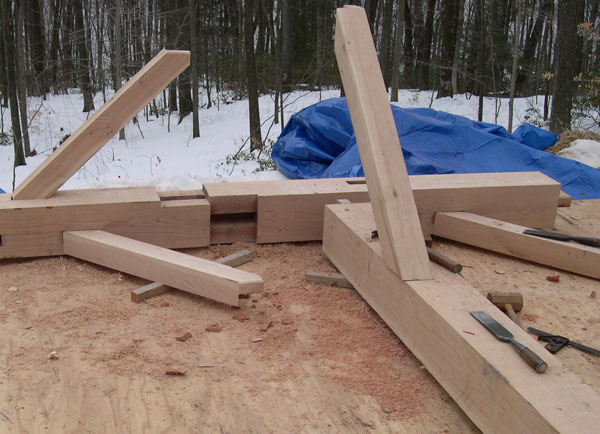
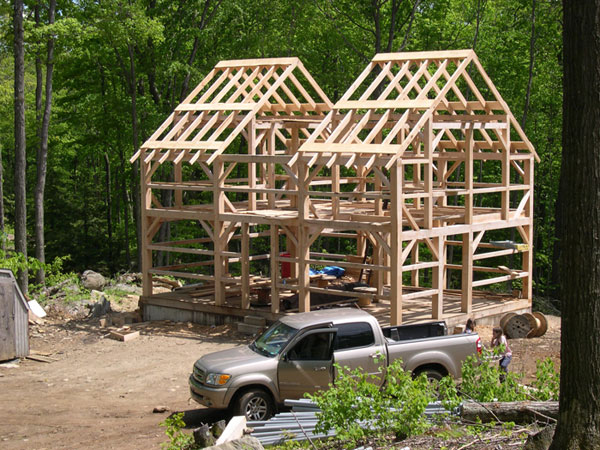
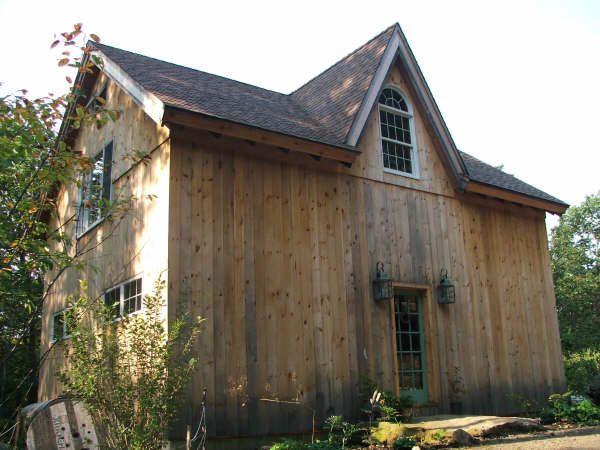
We planned wood from trees on the site! We custom cut all of the complex joinery to make the posts and beams link together. The barn framework The finished product is a cozy and eco-friendly office and retail space.

Come visit the “barn”, a post and beam structure constructed from the oak trees that grew on the site. It is serving as our office. We invite you to come visit, walk the display gardens, ask plant questions and enjoy! And take home a few native plants!

There’s always a place for a native plant in every landscape!

Questions about your landscape? We have a landscape designer ready to answer all your questions.

Wetland issues? Talk to the wetland ecologist and soil scientist to get answers.

APRIL 22 - EARTH DAY ALSO OPENING DAY HERE AT EARTH TONES!

Where To Find us, Events 2010

Posted by Kyle

Feb 23rd

CT Association of Wetland Scientists: presentation on An Acidic Fen in Woodbury
For more information:(203) 888-5146 • ctnofa@ctnofa.org

March 4th
New Hartford Land trust, New Hartford CT
Invasive Plants and Native Plants

March 10th
Plumb Library, Shelton CT
Why Natives are important

Lisa will be doing a talk with Sean Hayden of the North West Conservation District. It will be held from 10:30 am to 12:30pm at the New Fairfield Senior Center, New Fairfield, CT. This show will include the science behind clean water through the use of our native soils and plants. A great discussion on storm water management directed to homeowners with lakefront properties.

March 20th
Pomperaug River Valley Watershed Coalition
Landscaping Ecologically
All day seminar at Bent of the River Audubon Center

March 25th
Nonnewaug High School, Woodbury, CT

Adult education classes. Learn How to Build a Rain Garden for your backyard
for more info www.woodburyFFA.org

April 3rd
Protect & Enhance Watercourses
FREE Workshop Rain or Shine
Sponsored by the Housatonic River Commission, Northwest Conservation District & Housatonic Environmental Action League
Kent School Auditorium 1 Macedonia Road, Kent, CT

April 10th
Freedom Lawn
Organic Land Care Recognize our natives
Roxbury Town Hall Roxbury, CT

The Economy and your Land

Posted by Kyle

With the current economic downturn we are ALL feeling the pain.  As our government, from local to state, are making cut backs, we the landowners, i.e. taxpayers, can help reduce the cost of doing business.  On the home front there are several things we can do that will save us money every day and reduce the cost that we contribute at the state and federal levels too.

Lately we have heard lots of conversation around the term “carbon footprint”, with talk of such things as a carbon tax on every product.  A carbon footprint is the amount of carbon dioxide emitted by ones actions. i.e.  drive a truck which emits X amount Co2, or  cook a dinner and emit X amount of Co2.  Possibly a more appropriate term to use for this discussion would be an “ecological footprint” or simply the measure of demand on the ecosystem to support humans.  This takes into account such things as how much land and water it takes to feed, cloth, wash, transport, and entertain every person.
Looking at our ecological footprint in regards to a plant nursery we see in the case of the “traditional, main stream” nursery stock, it would be the energy it takes to grow, ship and maintain a plant.  In conventional agriculture there are carbon imputes from such things as shipping of seeds or starter plugs (by truck, diesel), green house heat (usually oil), fertilizer (usually petroleum based), lights (electricity) and more shipping, most nursery stock is grown in California, Oregon, and the Carolina’s (more trucking), and additional annual carbon imputes if this plant needs to be watered, fertilized and pruned to remain healthy.  There can be additional costs associated with plants to be shipped.  Other costs  incurred can come from diseased plants, pests, or invasive plant that are  brought to a new location.  We the government spend substantial quantities of manpower and money to contain and control such situations.  For example, look at how the Asian long-horned beetle has been dealt with in the northeast.

Fortunately at Earth Tones the use of carbon in producing plants at the nursery is very low.  we collect the seed often on hikes,while biking or in our travels,(some carbon from auto) .  Some carbon is used to move soils with the machine and pump water for times of little rain, but we do not use petroleum based fertilizers, we don’t use heated greenhouses or lights to grow our plants, we use solar power.  We do not ship our plants across the country, and this is our policy for a few reasons, first we want to keep the Connecticut gene pool strong by keeping our plants in our region for cross pollination with wild populations,  collect locally, sell locally.  This also encourages people who are not in our region that request plants to stimulate interest in native plants from their own region.  Keeping plants in our region also reduces the Co2 impact.    The annual cost of maintenance with native plants is usually zero or close to it because, once a native plant is placed in its proper site it will grow without the need for excess watering or fertilizers and does not need annual pruning.

Another area you can save BIG $$ and reduce your ecological footprint is your lawn.  In a 2007 report for the Dry Creek Conservancy titled Economic Benefits of River Friendly Landscaping; it states a typical suburban lawn uses 10,000 gallons of water in addition to the annual rainfall!! it also shows how converting 1 acre of lawn to a natural area can save $90,000 over 20 years time!!! According to the Environmental Protection Agency (EPA), 1 traditional gas powered lawn mower produces as much air pollution as 43 new cars each being driven 12,000 miles.  In America 800 million gallons of gas per year are used just to mow lawns!!!  If you use petroleum based fertilizers be aware that you are artificially supplying grass the nutrients it needs for survival, instead of the plant obtaining them from the soil. You are creating a chemically dependent plant.  And we have all seen what it cost an individual to kick their chemical dependency.  You may also need a watering system to maintain your lawn and someone to maintain your watering system.  Other direct and indirect costs can come from improperly applied fertilizers.  Applications need to be based on soil, rainfall and plant conditions, applying too much fertilizer can runoff and contaminate local waters.  This can create dead zones in aquatic systems and contribute to fish and other animal death.  Polluted water is one area we the government spend vast quantities of money to clean and if you do not have a well the cost of purifying  public drinking water  is also increased.

Some options for saving $$ ; NEVER have more lawn then you need! Reduce the size of your lawn if possible.  less area = less $ spent for maintenance.  If you like large grass areas consider fields.  Lawn can be converted to hay and cut up to 4 times a year, and cost you nothing in most cases.  You can convert your lawn to field and let it grow for 2 years, then cut it so it will be kept in field type habitat.  Mowing keeps the trees and shrubs from moving in and creating a forest.  Both will have immediate cost savings, up to $90,000 over 20 years, and greatly reduce your ecological footprint.  Another benefit in the big picture from field cover is food for pollinators.  Bees need quality food to create honey to survive the winter and native plants in your field will help!  On a regional scale, if the farmer does not need to have bees brought in to pollinate crops then there is a cost savings and again a reduction in the carbon cost of the produce.

Consider a Rain Garden.  A rain garden is a depression in the landscape designed to temporarily store water from gutters and driveways, parking lots and other non-pervious surfaces and allows it to infiltrate the soil .  How does this save money?  Putting water in the ground keeps it from concentrating and eroding your driveway or soil from your property.  Storm water management is one of our biggest areas of interest  by clients.  On a larger scale putting water back in the ground not only helps clean pollutants collected from this runoff but also helps recharge aquifers.  It also reduces the immediately large amount of water reaching the streams and rivers from surface runoff,  which helps in reducing potential flooding during a storm.  Repairing flood damaged property is very costly to all, especially river communities.  Rain gardens also provide beauty to your landscape and plants that provide nectar for wildlife, especially important to our pollinators.

Planting buffers along rivers and streams help in flood reduction, curbs nutrient impacts and improves habitat for wildlife.  Our rivers evolved within a forested landscape and keeping plants along rivers is essential for healthy streams and rivers.  Plantings of 25 to 50 feet from  riverbanks will enrich river and stream health, improve wildlife habitat and reduce erosion.  Eroded stream banks cause direct loss of property during major storm events, but without adequate vegetation there is continuous loss of soil that may not be noticed until a bank failure occurs.  Erosion is a natural part of river ecology but  the increased rate of erosion caused by anthroprogenic processes creates the problem.  To see the cost of increased flows in our streams and rivers review the repair of the 2007 flood damage at Orton Lane in Woodbury, CT, 06798.  Orton Lane now has a 12ft high steel sheet piling wall to protect the home on the river, effective, but not a very attractive or wildlife friendly area in the Pomperaug River.  Our clean streams and rivers also attract visitors to Connecticut that spend money in our towns.

Plant with Natives!  using native plants in your landscape can have many benefits which can reduce the money you spend every year on your property.  Many of the benefits such as having plants keep soil in place and absorbing carbon and providing oxygen, or having shade from native trees, are direct benefits to your home as well as your state, national and global budget.   Growing plants native to your region will benefit you by providing an essential component for the wildlife by strengthening the connections to the ecosystem and enhance the overall health of your ecosystem.  These plants also bring beauty to our landscapes without the need for synthetic fertilizers or watering.  So start saving today, not only the cash in your pocket, but the land  as a whole- the Big Picture!

Pictorial: Autumn at Earthtones

Posted by Lisa

Where does our celebrated fall color come from?

Posted by Kyle

Short days and cool temperatures are the dual triggers of fall color.  They are signals to the plants to begin preparing for their long winter snooze.  But some of the glowing colors are not just a part of getting ready for dormancy.  Many plants actually expend energy to produce the compounds that make the reds, yellows, and lovely purples, and oranges of fall.

On a basic level, the plants break down some of the more valuable components of their leaves and move them to locations where they can be safely stored during the cold season.  As chlorophyll is broken down and its components reabsorbed, the less valuable chemicals remain, giving the leaves a yellow or mahogany hue.  The more vivid reds and oranges are another story.  These are produced by compounds that the plant manufactures for a specific purpose.  As a rule, organisms do not expend energy without some kind of return.  People began to wonder what the benefits of foliage color could be.

There is currently much debate in the scientific community as to the exact nature of these benefits.  One theory is that the chemicals that generate different colors also protect the plants’ photosynthetic centers from cold temperatures.  This safeguards the plants’ ability to recover the most biologically costly of the chemicals associated with photosynthesis.

Another interesting theory is that the bright colors are actually a screen against aphids.  Worrying about aphids in November may seem a little silly, but this is actually the time when they are sizing up locations to lay their eggs.  The eyes of aphids are very sensitive to green, as it is likely to signal a meal, but they have a hard time seeing red.  This means that the red leaves which are so bright to our eyes are actually a good disguise against aphids.  They will move on to a tree with green or yellow leaves, and deposit their eggs there, thinking they have chosen the best potential food source.  Another of nature’s clever and fascinating ploys!

No one has figured out the definitive answer, and there are many more possibilities.  It is a rather interesting conundrum to consider while taking a walk through the bright colors this autumn.

The Glory of Winter

Posted by Lisa

bluestem grassAlthough most plants go dormant at the end of the gardening season, many of them leave behind gifts that can be enjoyed throughout the winter months. Not only are remaining seed heads and berries a food source for wildlife, but they’re also a source for winter interest in the garden. Perennial natives such as purple coneflower and black-eyed Susan produce attractive seed heads that are a welcome feast for hungry birds and provide a striking profile in the winter landscape. Pair them with other plants with architectural staying power like little bluestem grass and red-osier dogwood to create dramatic vignettes, especially when cloaked in a blanket of snow.

The key to successful winter gardening is to choose plants that offer appealing characteristics for most of the year and during the cold months. Don’t look at just flowers, think about a plant’s leaves, bark, form, seeds, and fruit. Select native shrubs like red cedars (for their evergreen forms), birches (for their attractive exfoliating bark) or winterberries (for their red fruit).

Also consider changing your maintenance routine. Old habits may die hard, but resist the temptation to deadhead, cut back, and rake out beds. Deadheading and cutting back may make things neat and tidy, but it also robs you (and animals) of those coveted seed heads and structural winter forms. Raking beds also eliminates Mother Nature’s homemade mulch, which provides plants with organic matter, moisture, and a layer of winter protection. Unless the spent leaves are likely to encourage the spread of disease or attract unwanted insects or rodents, it’s okay to leave clean up until we’re hungry for sunshine and eager to get dirt under our nails again in spring.

Download the EarthTones Fall 2007 Newsletter

Welcome Summer

Posted by Lisa

Official summer is almost upon us. The weather will become hotter, the ground drier and panic will set in the hearts of some gardeners when they think of the upkeep in watering the garden! Will their well risk running dry this hot season? Will there be bans on watering? Will they ultimately lose precious plant material?

If you have native plants in your garden, then the answer is No! The native plants, if planted in the right ecological conditions will survive. They have had years of practice at surviving these harsh weather conditions that the New England area is so known for (some are even proud of it!)

Lonicera sempervirensAfter installing your beautiful, beneficial and hearty native plant, once it’s established (and this will require maybe a month of growing time) all you need to do is enjoy it! Speaking from experience, there has been more than enough times I have planted a gorgeous native plant ( locating it in the proper soil and light conditions , of course) carefully setting it in it’s new home, lovingly mulched and watered it and then – poor thing- forgot all about it!

As you know, life seems to pull us and our attentions in many different directions. And the poor garden suffers. So, I forgot about the plant until it called out to me and finally attracted my attention by the beautiful blooms that it was wavy about ( reminded me of the student in the back of the classroom practically standing in the chair while waving her hand to get the attention of the teacher…). So I redirected my footsteps to take a minute and admire the new addition to the garden. Colorful, attractive, getting along well with the other plants in the garden, providing a nectar source for insects – very impressive! But I had confidence in her anyway, yet was still, none the less, pleasantly surprised.

Note to self, “Self, don’t forget to collect seeds in the fall from that one! She’s a beauty!”

The columbines are just going to seed, the Soloman’s Seal has finished it’s blooms, the spring ephemerals are starting to fade and yellow, I’ve already collected and have sown Marsh marigold seeds and Mitella seeds, the Dicentra’s are going to seed also…. Aside from the hot spell last week, the natural course of this plant palette screams “ Spring is over! Get ready for Summer!” The delicate soft green hues are turning deeper. The spring ephemerals that we so longed for, the ones that evoke the excitement like the birth of a new baby are now fading. Summer, with it’s heat, it’s intense solar glare, it’s dry ground and tough planting conditions needs some new recruits. The next wave of color is upon us!

GaillardiaMy favorites for Summer fun and color are:
Gaillardia (Blanket flower) -Loves full sun with fairly average garden soils. Crazy colorful and fun blooms that remind me of a brightly lit carousel during the summer evening fair. Hummingbirds enjoy this plant as well!
Asclepias - Wow! There is a milkweed for every occasion. Just to name a few…The A. tuberosa is the bright orange one that is at home in fields and open meadows, loves well drained soil and is hard to miss when in bloom.

Swamp Milkweed Asclepias incarnata A. incarnata prefers moister soil conditions (hence the common name Swamp milkweed) and A. syriaca – Common Milkweed, which is the only fragrant milkweed, tends to take over in a smaller garden, so prepare to have ample room for it so you don’t start a fight with it! The blooms last a fairly long time in a vase and I’ve read that the still fresh seed pods are edible. (Recipes anyone?)

Monarch Caterpillar

AND did you know that Milkweeds are a MAJOR food source for monarch butterflies? Plant a few milkweeds and ultimately you will also be enjoying beautiful butterflies, colorful caterpillars, and if you’re lucky enough- camouflaged chrysalis’.
Aruncus – for the shade garden only. This plant can tolerate drier soils and throws out a huge white fluff of a flower that droops delicately long into the season. A great one for filling up a space because the plant grows 4ft tall by 3ft wide.
Campanula- Always more fun when you go through life with a campanula!
Ok, ok. But really! Hardy plants, bell shaped flowers, handles drought, some are petite and delicate and some bold. How can you not want one?

Lonicera sempervirens - A honey of a plant! This woody stemmed vine flowers from mid May till Frost. And if the frost was not that bad, and there’s a warm spell - she’ll try to bloom a few more! Can handle sun to part shade and is a favorite with the hummingbirds!
Penstamon - This, like the columbine, has such a delicate flower, yet the plant is very tough in the driest locations. Can handle full sun to part shade.
Monarch ChrysalisVeronicastrum - I’m pushing this one a bit. It doesn’t flower until late in the summer, but I always have enjoyed the leaf pattern. It has a sturdy stem with a whorled leaf that adds an intriguing texture to the garden. It will ultimately grow 3ft +, so give it room.

Hope you had a wonderful Spring and now time for some Summer fun!

The Amelanchier

Posted by Kyle

Amelanchier canadensis, A. stolonifera, A. arborea and A. laevis can be found in our area. 

Amelanchier is a small tree or shrub that can be found in a variety of habitats from swamps to dry woods.  When you see a sprinkle of delicate white splashed in the woods and nothing else is flowering you have found an Amelanchier.  This plant is known to many by a variety of names such as; Serviceberry, Sarvisberry, Shadbush and Shadblow.  These names reflect the intimate connection people had with their environments.  The Sarvisberry is a tree found in Europe with similar fruit, after a while people corrupted sarvisberry into serviceberry. 

As for the name Shadbush and Shadblow, this refers to the running of the shad in the northeast.  The American Shad is an anadromous fish that would move up the Houstonic and Connecticut rivers and into the smaller rivers to spawn in May and June. At the same time, the Amelanchier start to flower.  Because it is the earliest shrub/ tree to flower and the only plant flowering at that same time and can be found along stream banks it was easily connected with the shad.

The Amelanchier is in the rose family, in our area it can be found as a single stem tree or a multi-stem shrub, on dry hills or in swamps and along streams.  It is a highly adaptable plant for many landscape environments.  Besides having lovely white flowers it produces outstanding fruit.  The berries are red to purple and about a 1/4″ dia.  They have a incredible flavor that a large number of birds delight in.  

They make some of the best preserves I have ever had and are great for pies too!  But there is one problem, you have to beat the birds and children to them, it does not take long for either to clean out a bush! 

 Which ever way you know this plant, it is one you should have in your landscape.

Spring Ephemerals

Posted by Kyle

The spring ephemerals are the first to show their stuff!

BloodrootWake RobinAlways a welcome site, these little beauties bloom before the trees unfurl their leaves. As the sun starts to warm the soil, these plants burst from tubers and bulbs and put up leaves and flowers all in a few weeks. Don’t cut them for your bouquets, many of these plants do not have a perfumed scent, as in the case of the purple trillium, a.k.a. Stinking Benjamin. These “stinking” plants attract flies for pollination. The spring ephemerals are often gone from the visable landscape by summer, but they have produced seeds and stored nutrients in their bulbs by this time and will be ready for next spring.

Trout Lily

In our area we see Bloodroot, Spring Beauty, Trout Lily, Hepatica, Squirrel Corn, Dutchman’s Breeches, Trillium and Twinleaf blooming in our shade gardens and woodlands.

A Skunk in the Woods

Posted by Kyle

If you are out for a walk and see some greenish purple coming up through the snow it’s OK.skunk cabbage

This is Symplocarpus foetidus, better known as Skunk Cabbage. The Spathe, a hoodlike structure stripped purplish and green, has a green round spadix (or flower), which looks like a tiny pineapple with the leave cut off, on the inside of the hood. As this structure is emerging it produces heat, which melts the snow.

The pineapple like part produces the odor that gives this plant its name. This less than agreable scent attracts flies that pollinate it. As spring approaches the large, 2+ feet, green leaves will emerge, creating quite a show, almost tropical.

When you see skunk cabbage you know you are near a swamp. They grown in wooded wetlands.

And, when you see skunk cabbage, you know Spring is near! 

many skunks

Vernal Pools

Posted by Lisa

Newt and  Marbled SalamanderIn March, when snow is still on the ground, but it’s warm enough for some rainy nights, this is the time when our region’s salamanders and other amphibians migrate towards vernal pools and ponds to breed. So on rainy nights, keep your eyes out for those little critters crossing the road.

Did you know that spring peepers use sugars in their bodies like antifreeze to keep from freezing during cold periods.

Did you also know that a spotted salamander can grow up to eight inches long and live for 25 years!

To find out more about these critters and their habitats, stop in or check out articles in “Digging deeper” on our web site or contact Kyle.

Spring Is Coming!

Posted by Lisa

childrentrout lillyHi everyone. Kyle and I hope you have had a great winter and are looking forward to the Spring planting season! We just wanted to let everyone know that we will be resuming our regular hours (Winter is appointment only) on Sunday April 22nd, which also happens to be Earth Day!

To learn more about Earth Day check out these sites:

We hope you can come by and visit. As always please contact us with any questions or help you might need as you plan your Spring planting!

-Lisa

Have a question?

Have a project idea you need help with? Want to get a project proposal, or just some friendly advice? Contact us today via our online form...